

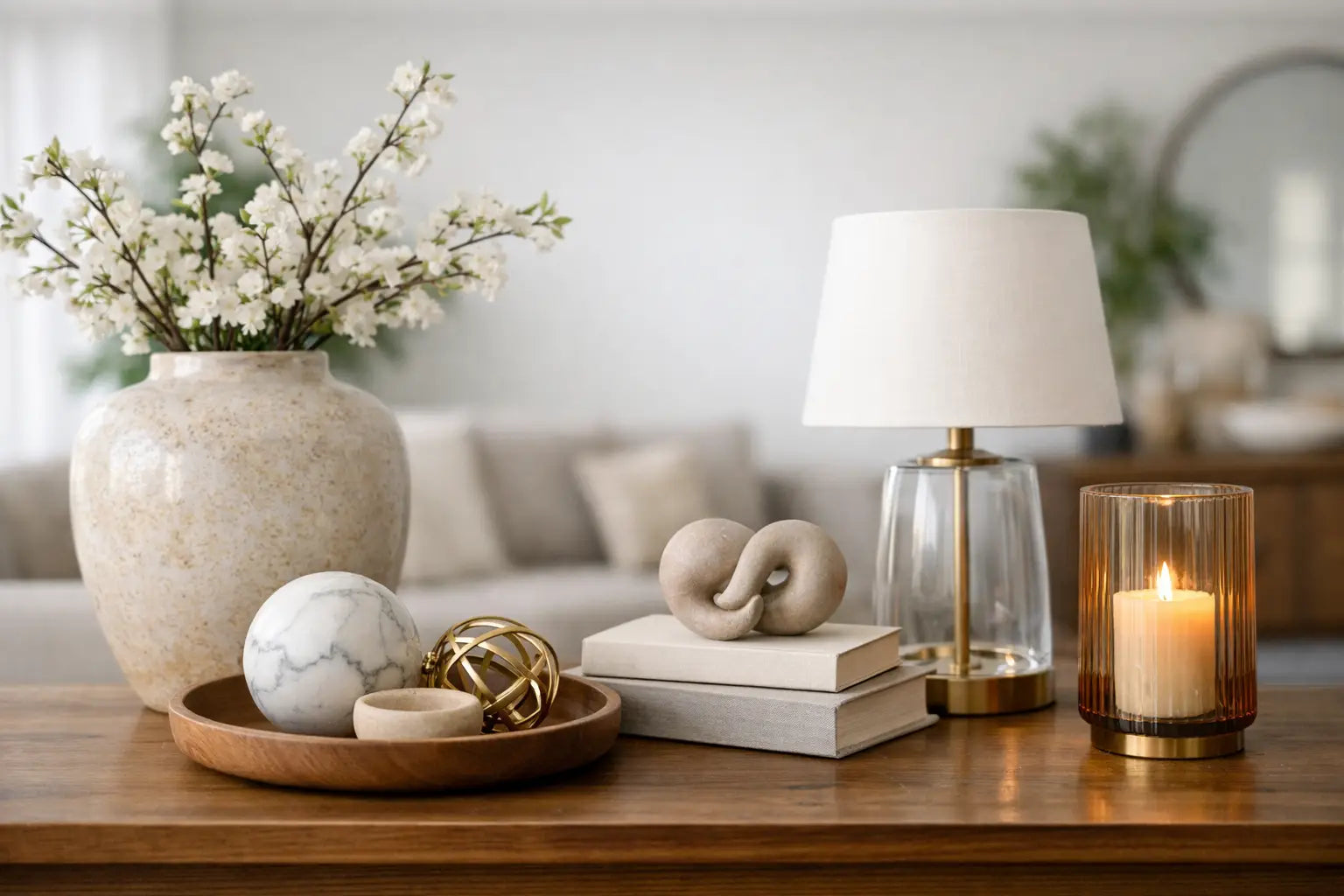
A room rarely feels finished when the larger furniture is in place. The sofa may be beautiful, the sideboard well made, and the dining table exactly the right size, yet the space can still feel flat. That final layer usually comes from home decor decorative accessories - the pieces that bring texture, warmth and personality into the everyday.
The best interiors do not rely on accessories as an afterthought. They use them to connect the room, soften harder lines, and give a home its own point of view. A carefully chosen mirror, a tactile cushion, a ceramic vase or a well-placed candle holder can do far more than fill an empty spot. It can change the mood of the room entirely.
Why home decor decorative accessories matter
Decorative accessories work because they add what larger furniture often cannot. Furniture establishes function and structure. Accessories shape atmosphere. They introduce contrast, help a room feel lived in, and allow you to refine a scheme without undertaking a full redesign.
This matters particularly in homes where you want a balance of polish and comfort. A beautifully crafted chest of drawers or a refinished vintage sideboard already carries character, but the surrounding details determine whether the room feels layered and complete. Without those finishing touches, even quality pieces can seem isolated.
Accessories also give you flexibility. If you enjoy updating your interiors seasonally or simply want the option to refresh a room over time, they offer a practical route. Swapping textiles, adding warmer metallics, or introducing a new lamp base is less disruptive than replacing furniture, yet the effect can still be significant.
Start with the room, not the object
One of the most common mistakes is buying attractive pieces in isolation. A decorative bowl catches your eye, or a sculptural lamp feels irresistible, but once home it has nowhere sensible to sit. Good styling begins with the room itself.
Look first at what the space needs. In a living room, that might mean softness and variation around a substantial sofa or coffee table. In a hallway, it may be height and light around a console. In a bedroom, the priority is often calm - accessories should support rest rather than create visual noise.
This is where restraint becomes useful. Not every surface needs to be dressed, and not every corner needs an object. Often, a few well-scaled pieces make a stronger impression than a collection of smaller items competing for attention.
How to choose decorative accessories that feel cohesive
A cohesive room does not mean everything matches. In fact, matching too closely can make a space feel showroom-like rather than personal. The aim is coordination through material, tone and proportion.
Think in layers of texture
Texture is often what gives a room depth. If your larger pieces are smooth and structured - painted cabinetry, polished wood, metal lighting - bring in contrast through softer or more tactile accessories. Linen cushions, woven baskets, ceramic vessels and layered rugs all contribute to a more considered feel.
In plainer schemes, texture can be more important than pattern. A neutral room with boucle, washed cotton, aged wood and matt ceramics will usually feel richer than one relying on colour alone. This approach also has longevity, which appeals to homeowners who want timeless interiors rather than something that dates quickly.
Use scale with confidence
Scale is where many styling choices succeed or fail. Accessories that are too small can look tentative, particularly beside substantial furniture. A large sideboard or a generous mantelpiece generally needs pieces with enough presence to hold their own.
That does not always mean choosing oversized items, but it does mean considering visual weight. A tall lamp paired with a low stack of books and a medium-sized vase usually feels more convincing than several tiny ornaments spread across the surface. Groupings should look intentional rather than accidental.
Repeat materials and tones
A room feels settled when certain elements are echoed quietly. If you have antique brass handles on a cabinet, a brass-framed mirror or candle holder elsewhere in the room can tie the scheme together. If your dining table has warm timber tones, accessories in similar earthy shades will sit more naturally than stark, unrelated colours.
There is room for contrast, of course. Black accents can sharpen a softer palette, and glass can lighten a heavier scheme. The key is to repeat enough of the room's existing language so nothing feels disconnected.
The accessories that earn their place
Some decorative pieces are purely visual, while others are both useful and beautiful. In most homes, the strongest choices tend to be the latter. They add charm, but they also support daily life.
Mirrors are a good example. They create light, add scale and bring shape to a wall, but they also make a hallway or bedroom more practical. Lamps do similar work, offering atmosphere and function in equal measure. Trays, decorative boxes and baskets can organise surfaces while still contributing to the look of a room.
This is especially valuable in busy family homes, where style needs to coexist with real use. A room should not feel so precious that nobody can live in it properly. Accessories should elevate a space, not complicate it.
Styling different areas of the home
Different rooms call for different instincts. In living areas, layering tends to work best. Cushions, throws, candles, books and statement lighting help create comfort, especially around seating and storage pieces. Here, variation is welcome, as long as there is a common thread in colour or material.
Dining spaces benefit from a slightly more disciplined approach. A centrepiece should anchor the table without obstructing conversation, and sideboards often look best with a balanced arrangement of height, texture and negative space. A lamp, a vase of seasonal foliage and a bowl or pair of candlesticks can be enough.
Bedrooms usually respond well to gentler styling. Think upholstered textures, soft lighting, mirrors, and a limited palette that encourages a sense of calm. Too many decorative objects can make the room feel restless, so editing matters.
Hallways are often overlooked, yet they set the tone for the rest of the home. A console table with a mirror, lamp and a small decorative accent immediately gives the space purpose. Even compact entrances can feel considered with the right proportion and finish.
When character matters more than perfection
The most memorable interiors tend to have a little individuality to them. That may come through a painted vintage chest, an aged mirror, or accessories with a hand-finished look rather than an overly polished uniformity. Character brings warmth, and it helps a room feel collected over time.
This is where decorative accessories can do especially valuable work. They can bridge classic and contemporary pieces, making a scheme feel more personal and less rigid. A traditional table lamp can soften a modern console. Rustic ceramics can sit beautifully against refined cabinetry. It depends on balance, but those contrasts are often what make a room interesting.
For customers drawn to quality furniture with heritage appeal, accessories are also a way to support that craftsmanship rather than compete with it. At Smallhill Furniture Co, this is part of the charm - pairing statement furniture with finishing pieces that let the whole room feel elegant, characterful and lived in.
A note on buying fewer, better pieces
There is a difference between a styled room and a crowded one. The temptation with accessories is to keep adding, especially when a space still feels unfinished. Yet often the issue is not quantity but choice.
A few well-made pieces in the right materials will usually outlast a collection of trend-led items bought to fill gaps quickly. Better accessories tend to have stronger finishes, more tactile appeal and greater versatility across different rooms. They also sit more naturally alongside quality furniture, which matters if you are investing in your home over time.
It is sensible to leave room for evolution. Your home does not need to be completed in one go. Sometimes the best accessory choices come after you have lived with a room for a while and understood what it lacks - warmth, height, softness, contrast, or simply a little more personality.
Home decor decorative accessories should feel personal
A beautiful home is not built by formula alone. Proportion, palette and texture all matter, but the most successful spaces still reflect the people living in them. Decorative accessories are where that personality often becomes visible.
Choose pieces that speak to the atmosphere you want to create, not just what looks fashionable in the moment. If an object adds beauty, supports the room, and feels at ease with the furniture around it, it is likely the right choice. The finishing layer should never feel forced - it should feel like the home has quietly come into its own.


