

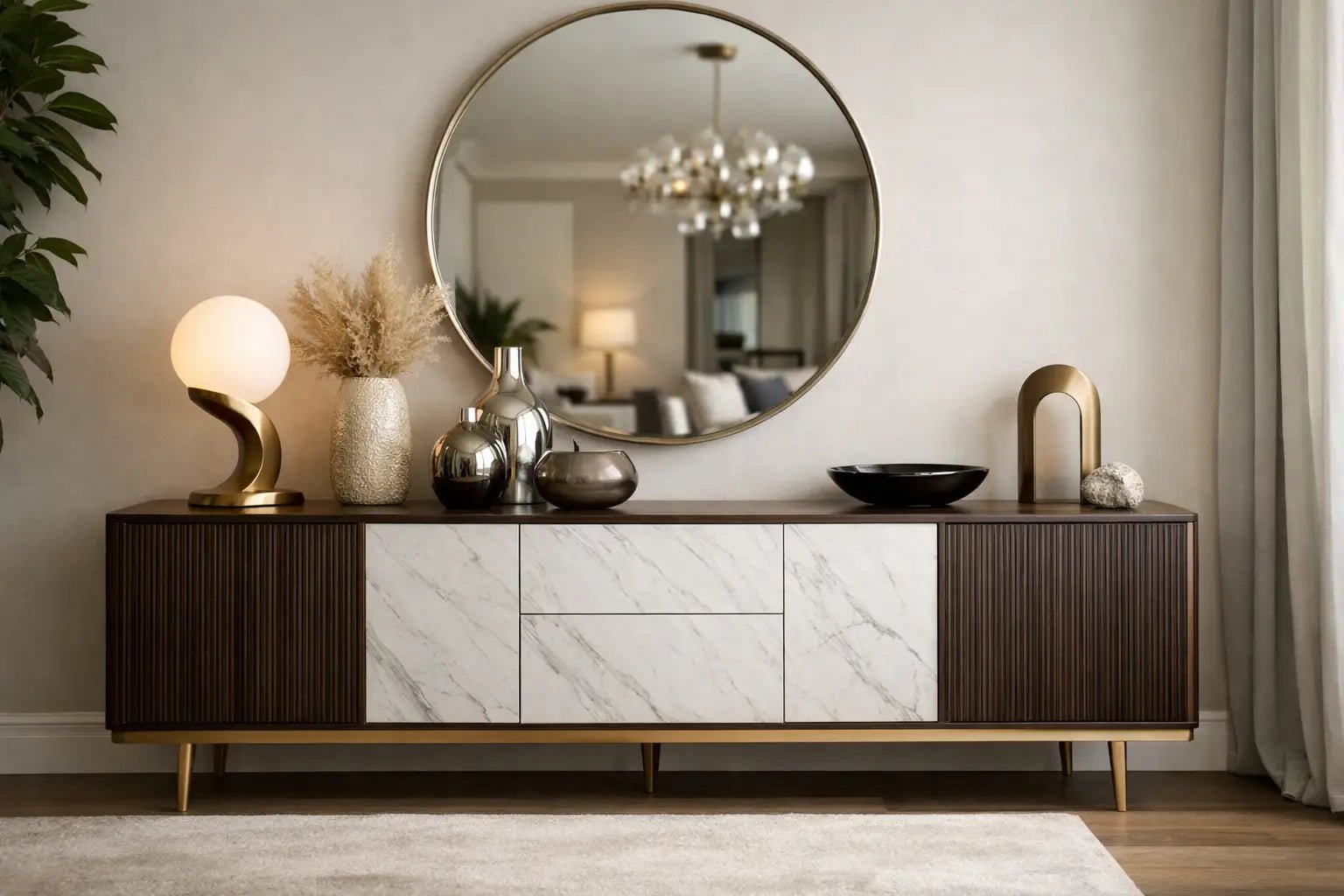
A well-chosen sideboard changes a room faster than most people expect. Among the many options in the luxury sideboards UK market, the best pieces do more than fill a wall - they bring order, weight and a sense of finish to the space around them.
That matters whether you are furnishing a formal dining room, softening an open-plan kitchen, or giving a hallway the presence it has been missing. A sideboard sits at that useful point between storage and statement. It has to work hard, but it also has to look considered from every angle.
What sets luxury sideboards UK shoppers apart
In practice, luxury is rarely about excess. It is about proportion, material quality and the confidence of a design that does not need to shout. The strongest luxury sideboards UK customers choose tend to share a few characteristics: solid construction, good visual balance, practical internal storage and finishes that feel enduring rather than fashionable for a season.
There is also a noticeable shift in what buyers want from premium furniture. People are moving away from flat-pack uniformity and towards pieces with more permanence. That may mean rich wood grain, hand-finished painted surfaces, brass-toned hardware, fluted detailing or a beautifully restrained silhouette that can sit comfortably in a room for years.
Character matters too. In many homes, the sideboard is one of the few larger pieces that can introduce personality without dominating the entire scheme. It can anchor a dining space, bridge classic and contemporary influences, or add heritage charm in a way that feels collected rather than staged.
Choosing a sideboard for the room, not just the wall
It is easy to begin with measurements alone, but size is only part of the decision. A luxury sideboard should suit the rhythm of the room. If the piece is too shallow in presence, it can disappear. If it is too heavy for the setting, everything starts to feel cramped.
Dining rooms
In a dining room, a sideboard often earns its place through both storage and occasion. It can hold serveware, table linen, candles and glassware while also acting as a surface for styling when the table is not in use. Here, a slightly more substantial design usually works well. Rich timber finishes, elegant painted cabinetry and classic shapes with refined hardware all tend to suit the room’s more settled, entertaining-led purpose.
Living spaces
In living rooms, the balance can be different. A sideboard may sit beneath artwork, behind a sofa line or along a quieter wall that needs structure. This is where texture becomes especially useful. Fluted fronts, ribbed detailing, warm oak tones or a soft neutral painted finish can add interest without making the furniture feel overly formal.
Hallways and entrance spaces
Hallways call for a little discipline. Depth matters more here because circulation space is precious. A slim but well-made sideboard can still offer useful storage for keys, post, seasonal accessories and household essentials, while giving the entrance a more polished, finished feel. In narrower areas, raised legs or lighter finishes can help the piece feel less imposing.
Materials and finishes that justify the price
The quickest way to tell whether a sideboard will feel luxurious in daily use is to look closely at the finish. Photographs can show shape, but they do not always reveal the details that make one piece feel markedly better than another.
Solid wood and quality veneers remain favourites for good reason. Oak, mango wood and other richly grained timbers bring warmth and depth that tend to improve with age. Painted finishes can be equally compelling, particularly when they are layered and tactile rather than flat and synthetic-looking. A carefully refinished vintage sideboard often has a softness and character that mass production struggles to reproduce.
Hardware matters more than many buyers realise. Handles, hinges and drawer runners are touched every day. They should feel reassuring, not flimsy. The same goes for door alignment, shelf stability and the overall weight of the piece. In premium furniture, these practical details are part of the aesthetic experience.
New, vintage or refinished?
This is one area where personal taste and household needs genuinely shape the answer. New sideboards can offer clean lines, consistent finishes and an easier fit for more contemporary schemes. Refinished heritage pieces, on the other hand, often provide individuality that is difficult to replicate. They can bring depth, craftsmanship and a sense of story to a room.
For many UK homes, especially period properties or interiors that mix old and new, a refurbished sideboard can be the more interesting choice. It softens a space and avoids that showroom-perfect look that sometimes feels detached from real life. Smallhill Furniture Co understands this balance well, particularly for customers who want character-led interiors without compromising on finish.
Style directions worth considering
The right style depends on the rest of the room, but certain approaches tend to have more lasting appeal than others.
A classic sideboard with panelled doors, muted painted tones and traditional proportions suits country homes, townhouses and family interiors that lean timeless rather than trend-driven. It is comfortable, elegant and easy to dress with lamps, artwork and ceramics.
Mid-century inspired designs continue to appeal because they offer clean structure without feeling stark. Tapered legs, warm woods and curved edges can make a room feel more open, particularly in spaces where bulky furniture would be too much.
Contemporary luxury often comes through restraint. Think smooth silhouettes, dark timber, subtle metal accents and carefully considered symmetry. This works well in newer homes or renovated spaces where architecture is cleaner and decoration is more edited.
Then there are statement sideboards - pieces with bold texture, carved fronts, unusual paint finishes or dramatic scale. These can be brilliant, but they ask more of the room around them. If your lighting, wall colour and surrounding furniture are all relatively quiet, a statement sideboard can carry the scheme beautifully. If the room is already busy, a calmer design may have longer-lasting value.
Storage should suit real life
A sideboard may be beautiful, but if the storage is awkward, it will eventually become frustrating. Before choosing a design, think about what will actually go inside.
Drawers are useful for smaller items such as cutlery, placemats, candles or household paperwork. Cupboards are better for larger serving bowls, vases, games or electrical items you would rather keep out of sight. Adjustable shelving is a quiet advantage because it gives the furniture more flexibility over time.
If you are buying for a dining room, consider the practical reality of entertaining. Can you fit the pieces you reach for most often? In a living room, will the sideboard hide visual clutter without turning into a catch-all? Luxury furniture should make everyday life feel easier, not simply more polished.
Getting the scale right
One of the most common mistakes is buying a sideboard that is either too small to ground the wall or too large for the room to breathe around it. Width, height and depth all matter, but so does visual weight.
A long, low sideboard often works well under art or a mirror and can make a room feel more expansive. Taller designs can be useful where floor space is limited, though they tend to feel more traditional and more prominent. If your ceilings are low, an overly tall piece can make the room feel compressed.
Allow enough space at either side so the sideboard does not appear squeezed in. It should feel intentional, not merely fitted where it happens to fit. In dining rooms, make sure chairs can still move comfortably and doorways remain easy to navigate.
Styling a luxury sideboard without overdoing it
Styling is where many sideboards either come to life or start to look cluttered. The most elegant arrangements usually combine height, texture and restraint.
A table lamp or pair of lamps gives warmth and practical ambience. A mirror or artwork above the sideboard helps the piece feel anchored. From there, a few well-chosen objects - perhaps a vase, a stack of books, a candle or a sculptural bowl - are usually enough.
There is no need to fill every inch. Negative space makes the furniture feel more expensive because it lets the materials and shape speak for themselves. If the sideboard has an especially beautiful finish or detailing, lighter styling is often the wiser choice.
Why the best purchase is rarely the fastest one
When shopping for luxury sideboards UK buyers can be tempted by quick visual impact alone. Yet the most satisfying choice is usually the piece that still feels right after the first wave of attraction has passed.
That means asking a few practical questions. Will it suit your home if you repaint the walls next year? Does it offer enough storage for the way you actually live? Will the finish age gracefully? Can it work with both existing furniture and future additions?
A sideboard is not a throwaway purchase. It is one of those substantial pieces that quietly influences how a room functions and how it feels to spend time there. Choose one with integrity, and it will do far more than store your belongings - it will give the space a stronger sense of home.
If you are weighing up options, trust the piece that combines usefulness with presence. The right sideboard should feel beautifully made, easy to live with and entirely at ease in your room from the moment it arrives.


