

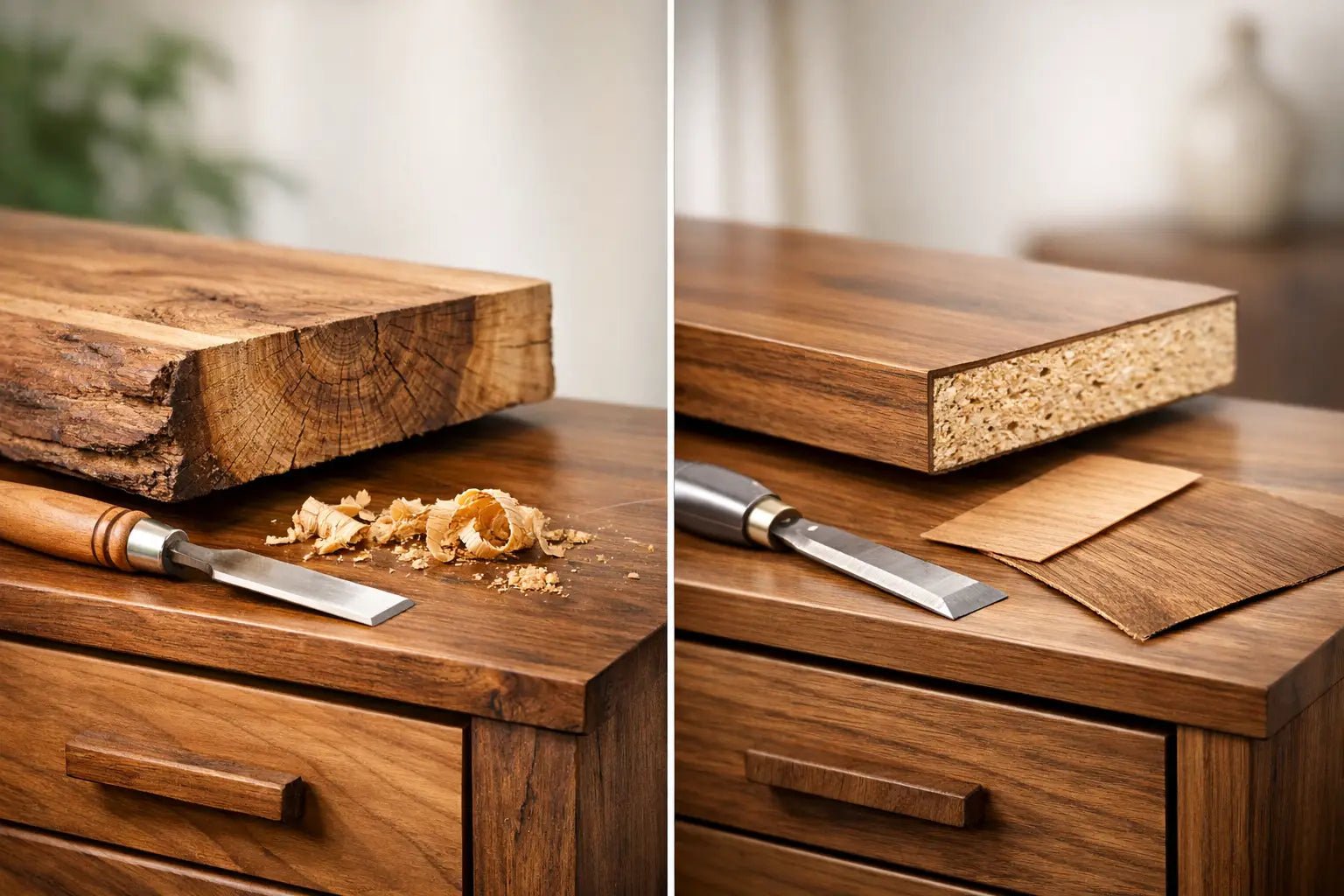
A dining table can look beautifully weighty online, arrive in your home, and still leave one nagging question: what is it actually made from? When clients compare solid wood vs veneer furniture, they are rarely choosing between “good” and “bad”. They are choosing between two different constructions, each with its own strengths, price point and place in a well-considered interior.
If you are furnishing a family dining room, updating a bedroom, or searching for a statement sideboard with character, understanding that difference matters. Material affects not only how a piece looks on day one, but how it lives with you over time - through everyday use, changing seasons, house moves and the occasional knock that real homes inevitably bring.
Solid wood vs veneer furniture: what is the difference?
Solid wood furniture is made from timber throughout the main structure or visible components. Oak, pine, mango, acacia and ash are common examples. Because the wood is natural all the way through, each piece carries its own grain variation, colour movement and small character marks.
Veneer furniture uses a thin layer of real wood applied over a core material, often MDF, plywood or engineered board. The outer surface is genuine timber, so the look can still be rich and authentic, but the internal construction differs. That distinction is where most of the practical trade-offs begin.
Veneer sometimes gets unfairly grouped with cheap flat-pack furniture, yet high-quality veneer has long been used in premium cabinetry and decorative furniture. In the right hands, it can create elegant surfaces, consistent grain matching and refined detailing that would be difficult, or very expensive, to achieve in solid timber alone.
How solid wood feels in a room
There is a reason solid wood remains so desirable. It has depth, warmth and a certain honesty that suits both classic and contemporary interiors. On a dining table, sideboard or bed frame, the material brings visual substance. Grain patterns feel organic rather than repeated, and the piece tends to age with a sense of authenticity.
For homeowners who want furniture with presence, solid wood often delivers that reassuring quality straight away. It works particularly well in homes where natural texture is part of the wider scheme - think linen upholstery, wool rugs, muted paintwork and layered lighting. It also pairs beautifully with refinished or vintage-inspired pieces, where character and craftsmanship are part of the appeal.
That said, solid wood is not perfectly uniform, and that is part of its charm. Timber expands and contracts with humidity and temperature changes. You may notice slight movement, fine surface marks or tonal shifts over time. For many buyers, that is not a flaw at all. It is the material behaving naturally.
Where veneer has the advantage
Veneer is often the more practical choice than people expect. Because it is bonded over a stable core, it can resist some of the warping and movement that affects solid timber. That makes it especially useful for wide table tops, cabinet doors and larger surfaces where stability matters.
It can also offer a more consistent finish. If you prefer a streamlined look, with cleaner grain matching and fewer natural variations, veneer can be ideal. In modern interiors, that polished consistency often feels intentional rather than less luxurious.
Price is another important factor. Veneer furniture can give you the appearance of premium timber at a more accessible cost. That does not simply make it a budget compromise. It can be a smart design decision if you would rather invest more heavily in one hero piece, such as a dining table or wardrobe, and balance the rest of the room with well-made veneered storage.
Durability is not as simple as it sounds
Many shoppers assume solid wood always lasts longer. Sometimes it does, but durability depends on how the piece is built, finished and used.
A solid oak dining table can cope brilliantly with years of family life and, if marked, may be sanded and refinished. That ability to restore the surface is one of solid wood’s strongest selling points. Minor dents, scratches and water marks do not always mean the end of the piece. With the right care, they can be softened, repaired or worked into the patina.
Veneer, however, is not automatically delicate. Well-made veneered furniture can perform very well for many years, especially in bedrooms, hallways and living spaces where wear is moderate. The caution comes with damage to the outer layer. Deep chips, lifting edges or heavy scratches are usually harder to repair because the wood layer is thin.
In practical terms, a busy kitchen-diner used daily by children, guests and homework might favour a sturdier solid wood top. A beautifully veneered chest of drawers in a principal bedroom may be absolutely the right choice. It depends less on labels and more on the demands of the room.
Style, finish and the look you are trying to create
Furniture is never just a technical purchase. It shapes the atmosphere of a room.
Solid wood tends to suit interiors where texture and character are front and centre. Rustic farmhouse tables, heritage-inspired sideboards, painted vintage pieces with exposed timber tops, and statement beds all benefit from the richness of real grain and natural variation. If you want a home that feels layered, collected and individual, solid wood often gives you more of that lived-in elegance.
Veneer suits a different but equally attractive brief. Mid-century silhouettes, sleek media units, contemporary dining furniture and tailored storage often rely on veneer for their clean finish. Because grain can be matched so precisely, the result can feel calm, architectural and refined.
Neither is inherently more stylish. The better question is what kind of character you want in the room. A home full of charm may benefit from the tactile depth of solid timber, while a more streamlined scheme might look at its best with carefully chosen veneer.
What about value for money?
Value is not the same as the lowest ticket price. It is about what you are buying, how long you expect it to last and how well it suits your home.
Solid wood usually commands a higher price because the raw material is more costly and heavier to produce and transport. For pieces that take daily wear - dining tables, coffee tables, bed frames and substantial sideboards - that investment often makes sense. You are paying for material depth, repair potential and timeless appeal.
Veneer often represents excellent value where appearance, stability and affordability need to sit together. A well-made veneered cabinet can look sophisticated, function beautifully and free up budget for other finishing touches such as lighting, mirrors or upholstery.
This is often the most sensible way to furnish a whole room. Not every piece needs to be solid wood. A thoughtful mix usually gives better results than spending heavily in every direction.
Caring for both types properly
Whether you choose solid wood or veneer, daily care makes a considerable difference. Heat, standing water and harsh cleaning products are unkind to both. Use mats under hot dishes, wipe spills promptly and avoid soaking the surface.
For solid wood, seasonal movement is normal, so it helps to keep the room environment reasonably consistent. Very dry air or strong heat from radiators can encourage cracks or shrinkage. Gentle polishes or waxes may help maintain the finish, depending on the product used.
Veneer benefits from a lighter touch. A soft cloth and suitable cleaner are usually enough. The main thing is to prevent moisture getting into edges or joins and to avoid abrasive treatment that could wear through the surface.
In either case, better furniture rewards better habits. Simple care preserves finish, colour and overall feel far more effectively than occasional rescue attempts.
How to choose the right one for your home
Start with the room, not the material. Ask how the piece will be used, who will use it, and whether you want it to age gracefully or remain visually uniform. A family dining table, for instance, may justify the resilience and refinishable nature of solid wood. A hallway console or bedside chest may be perfectly served by veneer if the design, finish and scale are right.
Think about your wider interior as well. If your home leans into timeless, character-led furniture, solid wood can anchor the space beautifully. If you prefer a more tailored, contemporary look, veneer may complement that direction more naturally.
Finally, pay attention to craftsmanship. A poorly made solid wood piece is still poorly made. A high-quality veneered piece can be elegant, durable and thoroughly worthwhile. Construction, joinery, finish and proportion matter just as much as the material label.
At Smallhill Furniture Co, we see this often: the best interiors are not built by following rigid rules, but by choosing pieces with care, purpose and character. When you understand the difference between solid wood and veneer, you buy with more confidence and style with more intention.
The right furniture should feel at home in your space from the moment it arrives, and even more so after years of living with it.


