

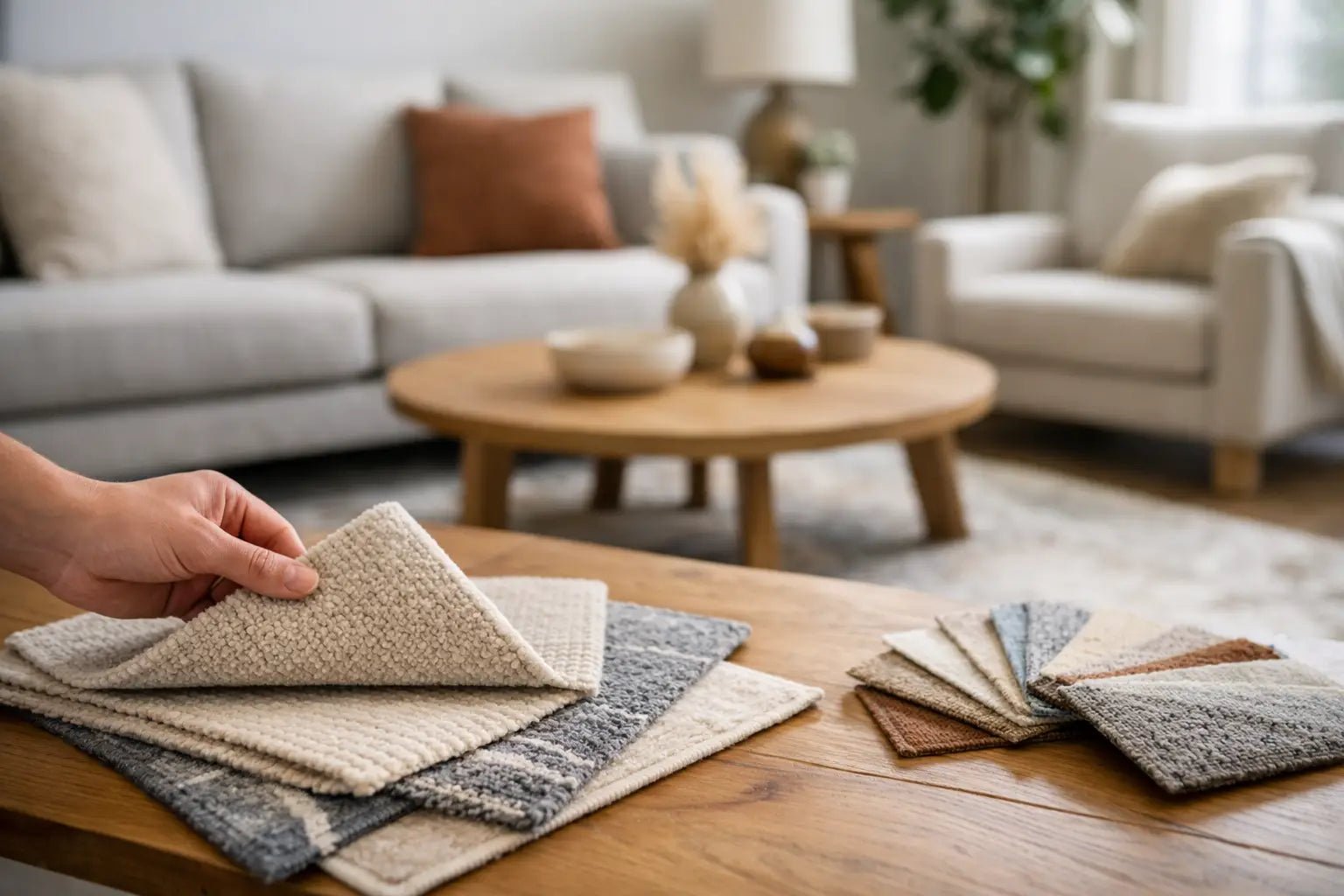
A living room rug can quietly pull a scheme together or make the whole room feel slightly off. If you are wondering how to choose a living room rug, the answer is rarely just about pattern or colour. Size, placement, texture and how the room is actually used matter just as much.
The right rug gives a space definition, softness and a sense of finish. It can anchor a seating area, warm up hard flooring and help larger pieces of furniture feel more connected. Get it right, and the room feels considered. Get it wrong, and even beautiful furniture can seem as though it is floating.
Start with the room, not the rug
Before looking at colours or motifs, step back and consider what your living room needs the rug to do. In some homes, the rug is there to soften timber or tiled flooring and make the space feel more comfortable underfoot. In others, it is used to zone an open-plan area, bring warmth to a neutral scheme or introduce pattern into a room built around plain upholstery.
Usage should guide your decision. A formal sitting room can carry a more delicate weave or lighter tone than a family living space with children, pets and daily footfall. If the room works hard every day, practicality deserves equal weight alongside style. A pale rug may look elegant, but if it will constantly show marks, it can quickly become frustrating rather than luxurious.
How to choose a living room rug size
Size is where most rug decisions are won or lost. A rug that is too small tends to make a room feel disjointed, while a generously sized rug usually creates a calmer, more polished look.
As a general rule, your rug should sit comfortably beneath the main seating area rather than hovering in the middle like an afterthought. In many living rooms, the front legs of the sofa and armchairs should rest on the rug. In a larger room, placing all furniture legs on the rug can look especially balanced and cohesive.
Leave a visible border of flooring around the edge of the room so the rug feels intentional. In UK homes, where living rooms are often more compact than those seen in glossy international interiors, proportions matter even more. Measure carefully before you buy, and use masking tape on the floor to map out the rug size. It is one of the simplest ways to avoid costly guesswork.
Common layout choices
If your seating area is compact, a rug that takes the front feet of the sofa and chairs is usually enough to anchor the arrangement. If you have a spacious room with a corner sofa, coffee table and additional seating, a larger rug can unify everything beautifully.
A smaller rug can work, but usually only when used very deliberately, perhaps beneath a coffee table in a secondary seating corner. For the main living area, undersized rugs rarely give the room the presence it deserves.
Think about proportion and furniture shape
Your rug should suit the scale of the furniture around it. Deep, generous sofas and solid wood coffee tables tend to sit well with rugs that have enough visual weight, whether that comes from size, texture or pattern. More delicate furniture can handle finer weaves and lighter designs.
Shape matters too. Rectangular rugs are the natural choice for most living rooms, especially when paired with standard sofa layouts. Round rugs can soften a room full of straight lines, but they work best when there is enough space around them to appreciate the shape. In a small room, a round rug can look charming beneath a circular coffee table, though it needs careful measuring.
Choosing colour without flattening the room
When deciding how to choose a living room rug, colour should support the rest of the scheme rather than compete with it. That does not mean playing safe. It means understanding whether the rug is meant to ground the room quietly or act as a focal point.
If your furniture already carries plenty of colour, shape or print, a more understated rug often brings balance. Think soft neutrals, faded traditional designs or tonal textures that add depth without demanding attention. If the room is built around plain upholstery and simple walls, the rug can do more of the decorative work.
Mid-toned rugs are often the most forgiving in busy homes. Very pale shades can be beautiful but show every mark. Very dark rugs can feel dramatic, though they may also highlight dust and lint. A softly patterned design in layered neutrals, muted blues, earthy reds or sage tones often gives a living room warmth and longevity.
Matching with wood, paint and upholstery
Look at undertones, not just surface colour. Warm oak flooring, cream upholstery and brass lighting tend to sit comfortably with rugs that have warmer bases. Cooler greys, painted furniture and black accents may suit cooler neutrals or more contemporary patterns.
This is where a curated home feels different from a rushed one. The rug does not need to match everything exactly, but it should feel as though it belongs with the furniture, textiles and finishes already in the room.
Texture changes the mood
A rug is not only visual. It changes how a room feels. Flatweaves give a cleaner, lighter appearance and can work well in contemporary or high-traffic spaces. Wool rugs tend to offer softness, insulation and a more substantial feel underfoot. High-pile or shaggy styles bring comfort, but they are not always ideal beneath coffee tables or in homes where easy cleaning is a priority.
If you want the room to feel relaxed and welcoming, texture is often more effective than bold pattern. A subtle woven finish, raised detailing or a softly distressed surface can add richness without overpowering the scheme.
This is particularly useful in rooms where statement furniture already has plenty of personality. Character-led interiors benefit from contrast. A refinished sideboard, a classic armchair or a striking coffee table can all stand out more beautifully against a rug with quiet texture and considered tone.
Pattern, plain or somewhere in between
Patterned rugs are excellent at disguising everyday wear and introducing character. Traditional motifs can add depth to newer interiors, while geometric or abstract designs suit more modern schemes. The best choice depends on what else is happening in the room.
If you already have patterned cushions, decorative curtains or expressive wallpaper, a plain or lightly textured rug may be the wiser option. If the room is fairly restrained, pattern can stop it feeling too flat or predictable.
There is also a middle ground that often works exceptionally well: rugs with faded, time-worn designs or subtle tonal motifs. These bring movement and interest without overwhelming the furniture. For many homes, they offer the most versatile balance of elegance and practicality.
Do not ignore everyday maintenance
A beautiful rug still needs to suit real life. That means thinking about vacuuming, shedding, spills and whether furniture will leave marks in the pile. Some materials are naturally easier to live with than others, and some weaves hide daily wear more gracefully.
If your living room is the busiest room in the house, choose with honesty. A rug that constantly needs careful treatment may not feel luxurious after a few months. A well-made rug in a practical tone and durable texture often proves to be the better long-term investment.
Rug pads are also worth considering, especially on hard flooring. They help prevent slipping, add a little cushioning and can support the rug's shape over time.
How to choose a living room rug for your style
The most successful living rooms do not follow rules too rigidly. They reflect the home and the people living in it. A classic interior may call for a traditional rug with gentle ageing and rich detail. A more contemporary space may benefit from a simpler design with strong texture and clean lines. If your style sits between the two, which many British homes do, a rug can be the piece that ties old and new together.
This is often where shoppers feel stuck. They worry about choosing something too trendy or too plain. Usually, the right answer is the rug that complements your main furniture pieces and still feels appealing beyond a single season. Timeless does not have to mean dull. It simply means the design has enough balance to live with well.
At Smallhill Furniture Co, that balance is often what turns a room from furnished to properly finished - a sense of comfort, craftsmanship and character working together rather than competing for attention.
If you are choosing between two rugs, trust the one that makes the room feel settled. The best rug is not always the loudest or the most fashionable. It is the one that gives your living space warmth, structure and the quiet confidence of a home that has been put together with care.


