

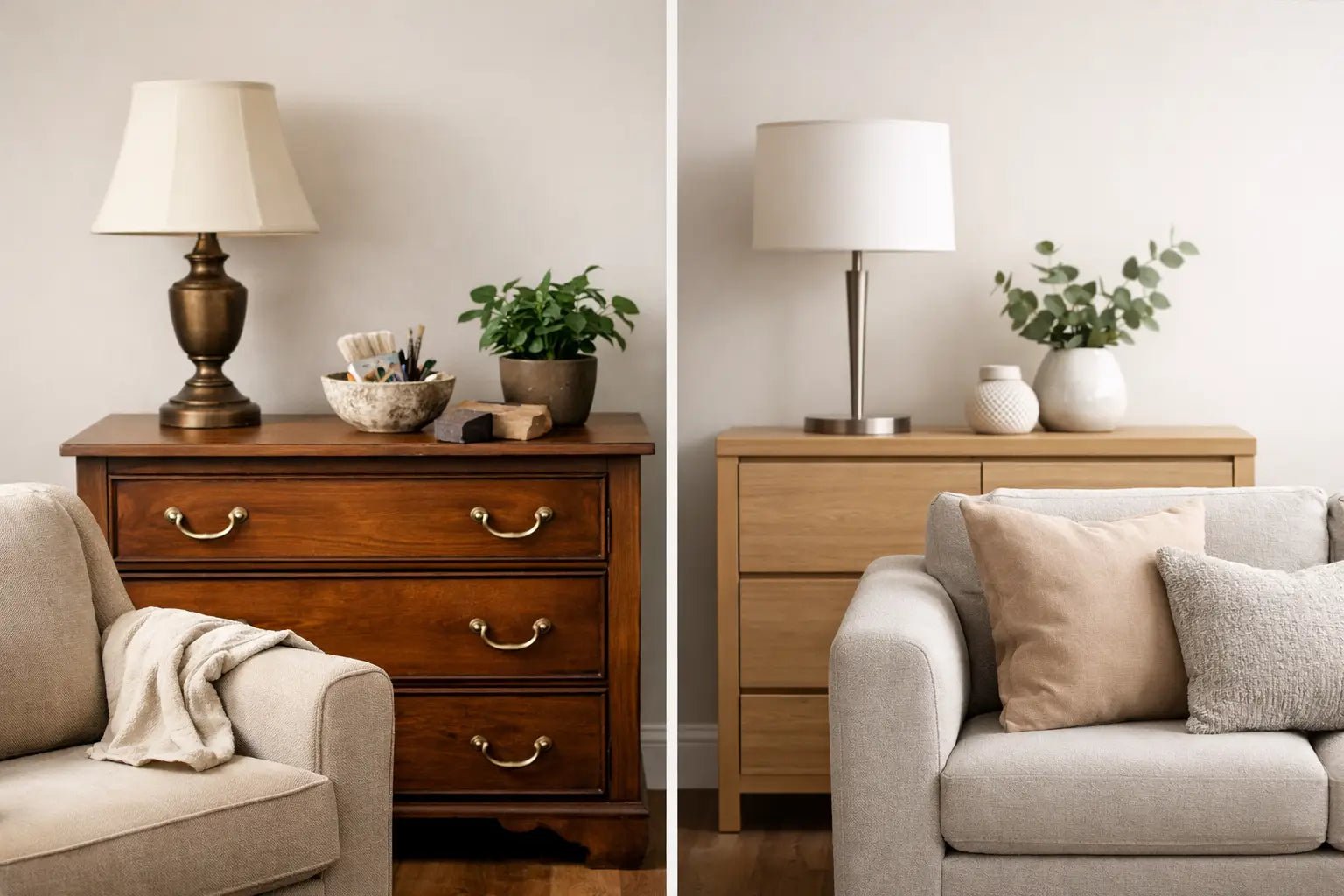
A painted vintage sideboard with the right proportions can make a hallway feel considered in a way a flat-pack substitute rarely does. That is the heart of refinished furniture vs new furniture: not simply which option is cheaper or quicker, but which one gives your home the right balance of character, quality and practicality.
For many UK homeowners, the choice comes up when a room starts to feel unfinished. You might want a dining table that can handle family life, a chest of drawers with proper storage, or a statement cabinet that lifts an otherwise ordinary corner. At that point, the decision is rarely black and white. New furniture offers convenience and consistency. Refinished furniture offers individuality, heritage and often surprising value.
Refinished furniture vs new furniture: what is the real difference?
New furniture is exactly that - newly made pieces, often available in a wide range of finishes, sizes and styles. It tends to suit buyers who want a particular look, a predictable lead time and the reassurance of matching collections.
Refinished furniture begins with an existing piece, often solid wood and built to last, which is then restored, repainted, refinished or otherwise updated. The best examples do not feel like second-best alternatives. They feel curated. A well-refinished Old Charm or Stag piece, for example, keeps the substance and proportions of the original while gaining a fresher finish that works beautifully in modern homes.
The distinction matters because it affects far more than appearance. It shapes how a room feels, how a piece performs over time and whether your furniture looks personal or simply purchased.
Style and character in everyday interiors
If you are furnishing a home with personality, refinished furniture has an immediate advantage. Older pieces often have details that are expensive to replicate today - shaped legs, carved fronts, dovetail joints, generous timber thickness and a sense of weight that gives a room presence.
When those pieces are refinished in carefully chosen neutral or heritage-inspired colours, they can sit comfortably alongside contemporary lighting, plain upholstery and modern decorative accessories. That blend is often what makes a home feel collected rather than over-coordinated.
New furniture, of course, has its own appeal. If your aim is a cleaner, more uniform interior, a new range can bring visual order. Matching bedside tables, wardrobes and chests create a polished look, especially in bedrooms or open-plan spaces where consistency matters. New designs can also reflect current tastes more directly, whether that means soft curves, darker wood tones or minimalist silhouettes.
The trade-off is that some new furniture can feel slightly anonymous if every piece comes from the same mould. Refinished furniture introduces variation, and with it, charm. That will not suit everyone. Some people want symmetry and sameness. Others want a room that looks as though it has evolved.
Quality is not just about being new
One of the biggest misconceptions in refinished furniture vs new furniture is that new automatically means better quality. In reality, quality depends on materials, construction and finish rather than age alone.
Many older furniture pieces were made from solid wood and built with long-term use in mind. A refinished vintage sideboard or chest of drawers can feel sturdier than a newly manufactured alternative at a similar price point. The bones are often better. When refurbishment is done properly, with careful preparation and durable finishing, the result can be both beautiful and dependable.
That said, not every older piece is worth saving, and not every refinished item is finished to the same standard. Buyers should look closely at smoothness of paintwork, condition of drawers and doors, quality of handles and whether the piece feels structurally sound. Good refinishing should enhance the furniture, not disguise problems.
New furniture ranges from excellent craftsmanship to disposable convenience. At the premium end, you may get outstanding build quality, beautiful veneers or hardwood construction and a very refined finish. At the lower end, you may be paying for a trend rather than durability. This is where shopping with a design-led retailer matters. Selection and finish make all the difference.
Cost, value and what you are really paying for
Price often drives the first comparison, but value is the more useful measure. A cheaper item that needs replacing in a few years is not especially economical.
Refinished furniture can offer strong value because the underlying piece already exists. You are paying for the quality of the original item plus the skill involved in restoring and updating it. In many cases, that means you can buy a substantial, distinctive piece for less than the cost of a newly made equivalent with the same presence.
New furniture can still be the better buy when you need exact dimensions, coordinated sets or specialist functions. If you need a king-size bed in a precise finish, or a dining table with extension leaves to suit a growing household, buying new may be more straightforward and ultimately more practical.
There is also the question of longevity in style. Refinished furniture tends to hold its appeal because it is rooted in classic forms. A fresh colour can be updated later, while the piece itself remains relevant. Some new furniture follows fashion more closely, which can be exciting now but less satisfying once trends move on.
Practical considerations for busy homes
Real homes need furniture that works as well as it looks. That is where the comparison becomes more nuanced.
New furniture often wins on specification. You may have more options for size, configuration and matching pieces. This is helpful in awkward layouts, newly extended homes or family spaces where storage needs are non-negotiable. Lead times can also be clearer, and if you are furnishing multiple rooms at once, consistency becomes easier.
Refinished furniture is often a better choice for statement areas where individuality matters more than exact matching. Hallways, dining rooms, living rooms and guest bedrooms are ideal places for one-off pieces that give the house its own signature. A refinished sideboard, console table or painted chest can anchor a room in a way mass-produced furniture rarely does.
It is worth acknowledging that refinished pieces may show the slight quirks of their original life. That is part of the appeal, but it does mean they are not always the right answer for buyers seeking absolute uniformity. Bespoke colour choices can help bridge that gap, allowing a more individual piece to sit neatly within your wider scheme.
Sustainability and thoughtful buying
For many customers, refinished furniture carries an environmental appeal as well as a design one. Extending the life of well-made furniture is a more considered approach than replacing everything with newly manufactured alternatives. It respects the craftsmanship already invested in the piece and keeps quality furniture in use.
That does not mean new furniture is automatically the less responsible option. A well-made new item chosen carefully and kept for many years can be a sound long-term purchase. The problem tends to be short-term buying - furniture selected for speed, low cost or temporary fashion, then discarded when it no longer suits.
Thoughtful interiors are rarely built that way. They come together through better decisions, not faster ones.
How to choose between refinished furniture and new furniture
The best homes usually include both. A newly made dining table might give you the exact size and finish you need, while a refinished vintage sideboard adds depth and character nearby. A new bed frame can create a calm, tailored bedroom, while painted bedside tables stop the room from feeling too showroom-perfect.
When deciding, start with the role of the piece. If it must meet a precise functional brief, new may be the sensible route. If it is there to add texture, individuality and visual interest, refinished furniture often has the edge.
Then consider the room itself. Formal spaces can carry one-off pieces beautifully. Hardworking family rooms may benefit from a mix - practical new anchor items softened by refinished accent furniture. Finally, think about what kind of home you want to create. If you are drawn to interiors with warmth, contrast and a sense of story, refinished furniture is often what gives them life.
At Smallhill Furniture Co, that balance between timeless new pieces and beautifully restored furniture is part of what makes a home feel truly personal. Not everything needs to match. It simply needs to belong.
The most satisfying choice is usually the one that gives you a room with substance - furniture that earns its place, works hard and still makes you pleased to see it every day.


