

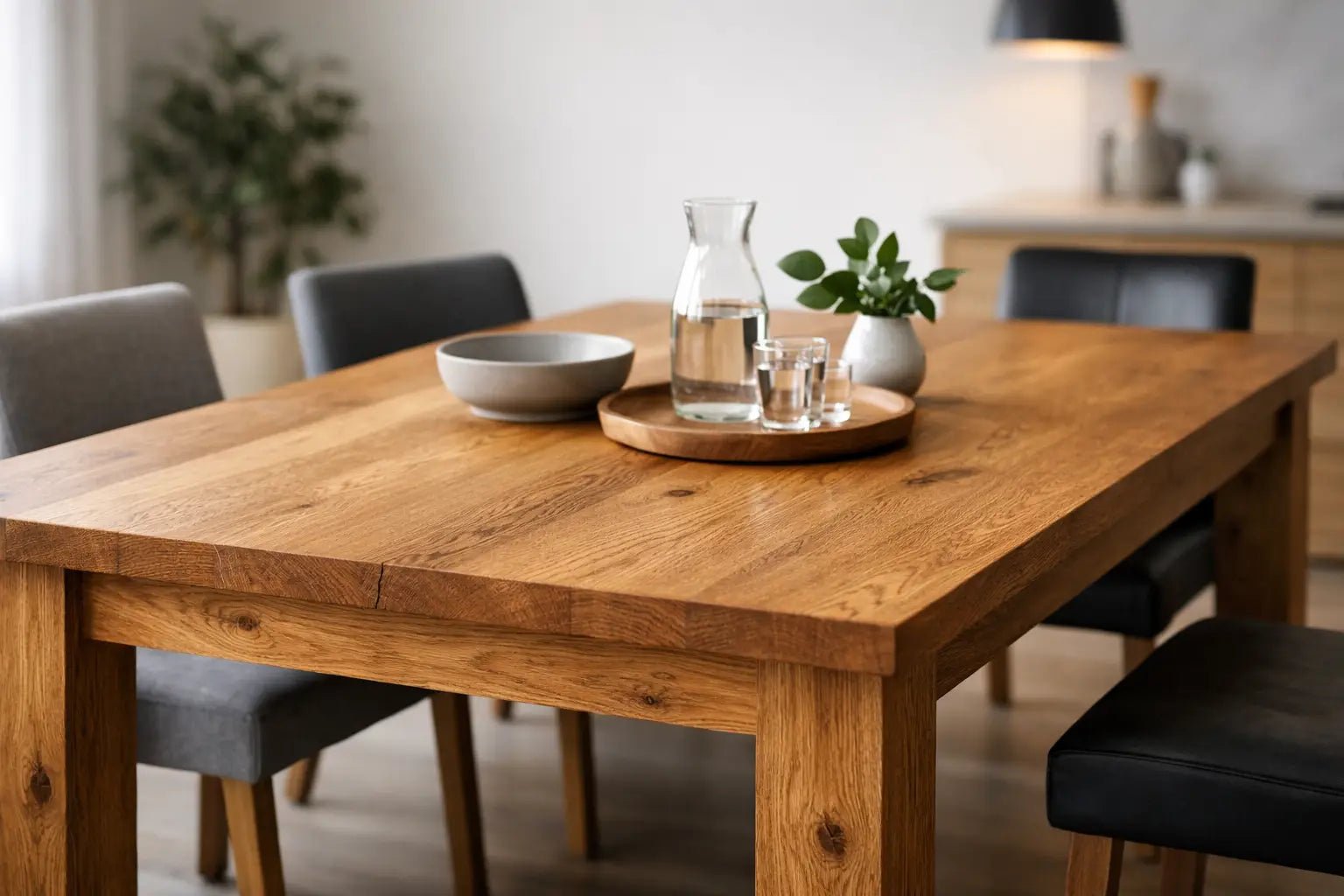
A dining table earns its keep in ways few other pieces do. It hosts weekday suppers, rushed school mornings, birthday cakes, working lunches and long Sunday roasts. That is exactly why a solid oak dining table review matters - this is not a throwaway purchase, but one of the hardest-working items in the home.
Oak has long held its place in British interiors because it offers something many trend-led materials cannot: substance. A solid oak table feels reassuringly weighty, looks better grounded in a room, and carries a natural grain pattern that gives each piece its own character. Even in cleaner, more contemporary schemes, oak adds warmth without feeling fussy.
Solid oak dining table review - what stands out first
The first thing most buyers notice is the look of the timber itself. A well-made solid oak dining table has variation in tone and grain, and that variation is part of the appeal. You are not getting a uniform, printed imitation. You are buying a natural material that brings movement and depth to the room.
That said, not every oak table offers the same finish. Some lean golden and traditional, which can suit farmhouse kitchens and period properties beautifully. Others are brushed, smoked or lime-washed for a more current feel. In a solid oak dining table review, finish matters just as much as the timber. The wrong finish can make even a quality table feel heavy or dated in the wrong setting.
The best examples balance presence with versatility. They feel substantial, but not cumbersome. They work with upholstered dining chairs, painted furniture and softer textiles rather than demanding a perfectly matched set. For homeowners who want a room to feel collected rather than showroom-staged, that flexibility is a genuine strength.
Build quality and construction
This is where solid oak tends to justify its higher price. A proper solid wood dining table should feel stable under everyday use, with no wobble, flex or hollow sound. Thickness of the top, the joinery, and the way the legs are fixed all make a difference.
A good table has a reassuring sturdiness when leaned on, moved slightly or used daily by a busy household. The surface should feel smooth and carefully finished, but not plasticky. If the lacquer is too heavy, the oak can lose much of its charm. If the finish is too raw, it may be vulnerable to marks before it has settled into family life.
There is also a practical point that often gets overlooked - weight. Solid oak is heavy. That is excellent for a feeling of quality, but less ideal if you regularly rearrange furniture or live in a home with awkward access. In older properties with narrower hallways or tighter dining rooms, delivery and positioning should be considered before you fall in love with a larger design.
The difference between solid oak and oak veneer
For many buyers, the key question is whether solid oak is worth paying more for than veneer. The answer depends on priorities. Veneer can look smart, particularly at first glance, and it often suits lower budgets. But solid oak generally offers greater longevity, a more authentic feel, and better tolerance for light refinishing over time.
That does not mean veneer is poor quality by default. Some veneered tables are beautifully made. But if you want a table with genuine heft, visible timber character and the potential to age gracefully over many years, solid oak remains the stronger choice.
Everyday use - how does it perform?
A dining table can be beautiful and still disappoint in day-to-day living. This is where practical design earns its place. The shape of the legs matters more than many people expect. Chunky corner legs can look handsome, but they may limit chair placement. A pedestal base gives more flexibility, although some people prefer the classic balance of four legs.
Surface texture matters too. A heavily rustic top with knots, grooves and saw marks can be visually striking, but crumbs and spills have a way of settling into every recess. If your dining table doubles as a homework station, craft table or home office desk, a smoother finish is often easier to live with.
Comfort around the table is another point worth weighing. The thickness of the apron beneath the top affects leg room. In a family dining space, especially one used for longer meals or entertaining, this makes more difference than showroom styling ever suggests. A handsome table still needs to be comfortable for six adults sitting with ease.
Round, rectangular or extending?
Solid oak works across all three, but each shape changes how the room feels. A rectangular table is the classic choice for longer rooms and larger households. It gives a strong architectural line and often feels more formal. A round oak table softens a space and can be particularly effective in square rooms or open-plan kitchens where circulation matters.
An extending design deserves special attention in any review because it offers the best of both worlds for many homes. Closed, it keeps the room feeling open. Extended, it handles guests without the need for a second occasional table. The trade-off is mechanical complexity. Extension leaves and runners need to be well made, otherwise even a solid oak frame can feel less elegant in use.
Style value - does solid oak date quickly?
One of oak's best qualities is its staying power. While specific silhouettes move in and out of fashion, oak itself rarely feels irrelevant. It can sit comfortably in country interiors, pared-back contemporary homes, and more classic schemes with equal confidence.
The trick is in the design details. A heavily turned leg and deep honey stain will naturally feel more traditional. A slimmer profile with a softer matte finish feels fresher and easier to pair with mixed materials such as linen, boucle, black metal or painted cabinetry. For buyers who want longevity, it is often wiser to choose a classic shape and let chairs, lighting and table styling carry more of the trend element.
This is where a curated retailer can make the process easier. At Smallhill Furniture Co, the appeal lies in furniture with character rather than pieces that feel mass-produced, and that is very much the mindset oak suits best.
Maintenance and ageing
A solid oak table is not high-maintenance, but it is not maintenance-free either. Real wood responds to its environment. Central heating, direct sunlight and fluctuating humidity can all affect it over time. Small movement in the timber is normal. In fact, that natural behaviour is part of what distinguishes solid wood from synthetic alternatives.
For everyday care, a soft cloth and prompt attention to spills are usually enough. Heat mats and placemats are worth using, especially in family homes where hot dishes and mugs are set down without much ceremony. If the finish is oiled, periodic re-oiling may be needed to keep the timber nourished. Lacquered tops ask less of you, but can show scratches differently.
The reassuring point is that oak tends to age with dignity. Fine marks often soften into the character of the piece rather than ruining it. That is a very different experience from thinner, lower-cost finishes that can chip, peel or expose obvious substrate underneath.
Value for money
Solid oak dining tables sit at a higher price point for good reason. The material costs more, construction is typically more substantial, and delivery can be more complex due to weight. For some homes, that investment makes perfect sense. For others, especially where the table may be a temporary choice for a few years, veneer or painted hardwood might be more proportionate.
Value should be judged over time, not simply at checkout. If a solid oak table looks better after five years, still feels stable, and remains adaptable through decorating changes, the long-term return can be very good. It is often the sort of piece people keep even when they move house, which says a great deal.
Still, there are trade-offs. If you prefer ultra-light furniture that is easy to shift, or you want a very sleek, uniform finish, oak may not be the perfect fit. Likewise, in very compact dining areas, some heavy oak designs can dominate more than they should. Scale matters as much as quality.
Who should buy one?
A solid oak dining table suits buyers who want permanence, warmth and a natural material that can handle real life. It is particularly well suited to family homes, characterful kitchens, open-plan dining spaces and interiors that mix classic and contemporary elements.
If your priority is a table that feels substantial, photographs beautifully, and will not look tired after a couple of seasons, oak remains one of the safest and most stylish choices. If budget is the leading concern, there are more affordable routes, but they rarely deliver the same depth of character.
The best way to judge it is simple: imagine the table not as a finishing touch, but as part of the rhythm of the home. If you want a piece that grows into family life rather than merely filling a gap, solid oak is usually money well spent. Choose the right size, the right finish and the right shape, and it will reward you quietly for years.


